
Project management is often visualized through Gantt charts, budget spreadsheets, and timeline milestones. While these tools are vital, they represent only the skeleton of a project. The muscle and nervous system that drive actual execution lies in communication. For project coordinators, the ability to facilitate clear information flow is not merely a soft skill; it is the primary determinant of whether a project delivers value or falls into the category of missed deadlines and budget overruns.
This guide explores the critical, often overlooked function of communication within project lifecycles. We will examine how coordinators can establish robust information channels, manage stakeholder expectations, and mitigate risks through proactive dialogue. By focusing on these fundamentals, teams can align their efforts and navigate complexities with greater confidence.
🔍 Why Communication is the Invisible Infrastructure
Many teams assume that once a plan is written, execution is automatic. This assumption is the root cause of many project failures. Information decay occurs naturally over time without active reinforcement. Without a dedicated focus on communication, details slip, assumptions solidify into errors, and team members begin working on outdated premises.
For a project coordinator, the role extends beyond scheduling meetings. It involves ensuring that the right information reaches the right people at the right time. This infrastructure supports decision-making and keeps the project moving forward.
Alignment: Ensures all stakeholders share a common understanding of goals and constraints.
Trust: Transparent communication builds confidence among team members and leadership.
Problem Solving: Early detection of issues allows for faster resolution before they become critical.
Efficiency: Reduces the need for rework caused by misunderstandings or missing context.
When communication breaks down, the project does not necessarily stop; it slows down. Energy is wasted clarifying instructions, correcting errors, and managing frustration. A coordinator who prioritizes this function acts as a force multiplier for the entire team.
📡 Core Communication Channels and Methods
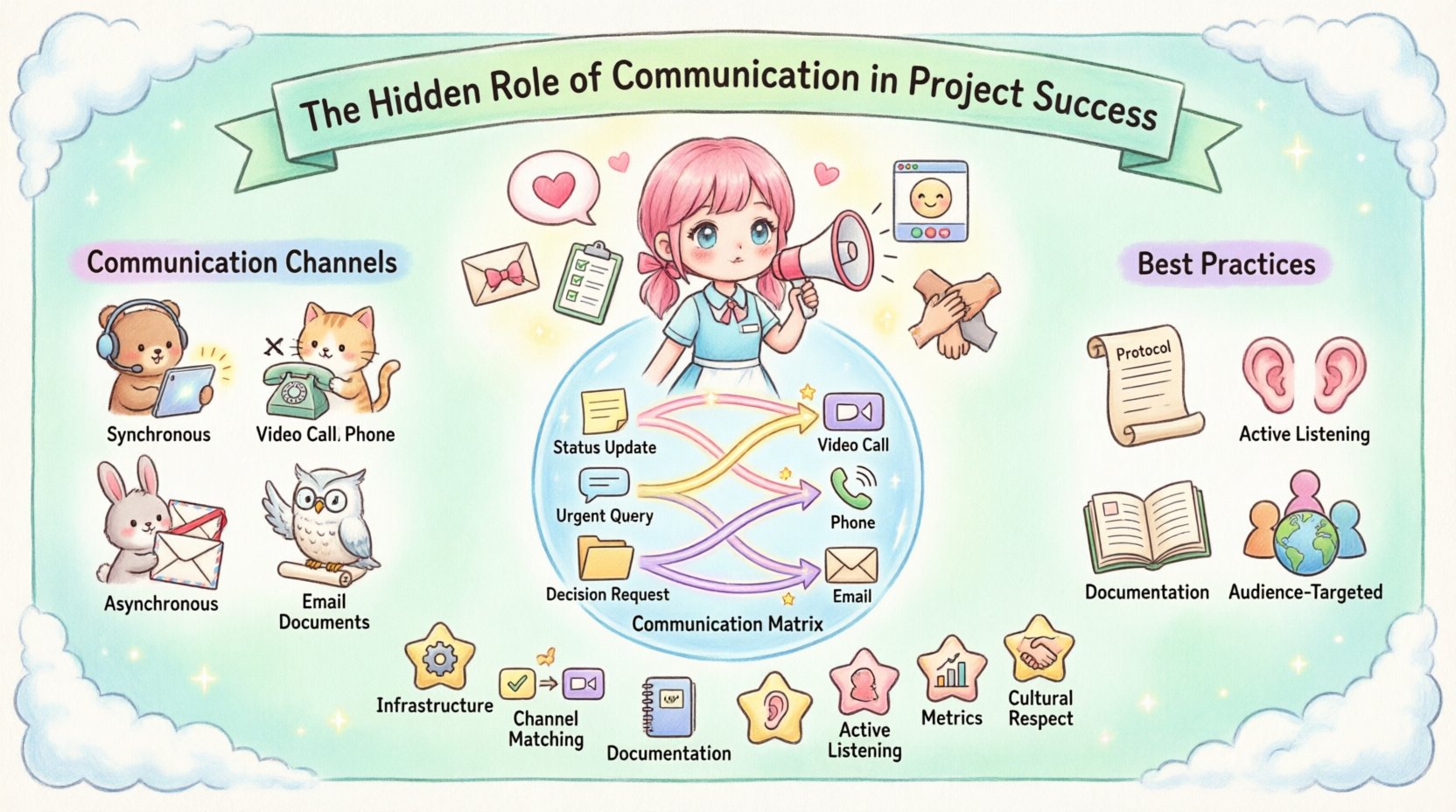
Not all communication serves the same purpose. Using the wrong channel for the wrong message creates noise and confusion. Coordinators must curate a mix of synchronous and asynchronous methods to suit different needs.
1. Synchronous Communication
These are real-time interactions. They are best for complex discussions, conflict resolution, or brainstorming sessions where immediate feedback is necessary.
Face-to-Face Meetings: Ideal for sensitive topics or high-stakes decision-making. Non-verbal cues help gauge sentiment and understanding.
Video Conferencing: Maintains personal connection in distributed teams. Useful for status updates that require visual aids.
Quick Calls: Best for resolving immediate blockers without the overhead of a formal meeting.
2. Asynchronous Communication
These methods allow participants to engage at their own pace. They are essential for deep work and global teams across different time zones.
Email: Suitable for formal records, announcements, and detailed summaries that do not require immediate action.
Documentation: Wikis, shared drives, and project logs provide a single source of truth for processes and history.
Task Management Boards: Updates on specific items keep the team informed without constant notifications.
3. The Communication Matrix
Selecting the appropriate method depends on the audience and the urgency of the message. The following table outlines best practices for matching message type to channel.
Message Type | Recommended Channel | Frequency | Goal |
|---|---|---|---|
Crisis or Blocker | Phone or Video Call | Immediate | Rapid resolution |
Project Status Update | Email or Report | Weekly | Transparency and alignment |
Task Assignment | Task Board | On Request | Clarity of ownership |
Policy or Process Change | Documentation + Email | Once + Reminder | Record and awareness |
Team Building | Video or In-Person | Monthly | Culture and morale |
🛠️ Best Practices for Coordinators
Executing communication strategy requires discipline. It is easy to fall into the trap of over-communicating or under-communicating. The following practices help maintain a balanced and effective environment.
1. Establish Clear Protocols Early
Do not wait for a conflict to arise before defining how the team talks. At the start of a project, agree on norms. This includes response time expectations, meeting agendas, and documentation standards.
Response Times: Agree on how quickly urgent messages should be answered. This prevents anxiety about silence.
Meeting Hygiene: Every meeting must have an agenda and a defined outcome. If there is no agenda, cancel the meeting.
Naming Conventions: Ensure file names and folder structures are consistent so information is findable.
2. Practice Active Listening
Communication is a two-way street. Coordinators often spend more time sending information than receiving it. Active listening involves fully concentrating on what is being said rather than just passively hearing the message.
Paraphrasing: Repeat back key points to confirm understanding. “So, the priority is shifting to X, correct?”
Asking Questions: Open-ended questions encourage deeper discussion. Avoid questions that can be answered with a simple yes or no.
Observing Tone: Pay attention to how something is said. Frustration in a text message might need a call to clarify intent.
3. Document Decisions Relentlessly
Verbal agreements are fragile. They fade from memory and lead to disputes later. Written records provide accountability and context for future reference.
Meeting Minutes: Distribute notes within 24 hours. Highlight decisions made and action items assigned.
Risk Logs: Maintain a record of identified risks and the mitigation strategies agreed upon.
Change Requests: Any deviation from the original plan must be documented and approved.
4. Tailor Messages to the Audience
A developer needs different information than a client. A sponsor needs high-level progress, while an engineer needs specific technical details. One size does not fit all.
Executive Summary: Focus on budget, timeline, and major risks. Keep it brief.
Technical Deep Dives: Focus on architecture, dependencies, and implementation details.
Crisis Updates: Focus on impact, timeline, and next steps. Avoid technical jargon.
🤝 Handling Conflict and Misalignment
Conflict is inevitable in any collaborative effort. It often stems from misaligned goals or resource constraints. How a coordinator handles this situation defines the health of the project.
1. Address Issues Early
Small disagreements left unaddressed can fester into major disputes. Address concerns as soon as they surface. Do not wait for a formal review cycle.
Private Conversations: Discuss sensitive conflicts one-on-one before bringing them to the group.
Fact-Based Discussions: Focus on the issue, not the person. Use data and project requirements to guide the conversation.
Seek Common Ground: Identify shared goals. Remind the team that everyone wants the project to succeed.
2. Facilitate, Don’t Dictate
While coordinators manage the process, they should not always dictate the solution. Facilitate a discussion where the team can propose options. This increases buy-in and leverages collective intelligence.
Brainstorming: Encourage all voices to be heard without judgment.
Weighing Options: Analyze the pros and cons of each proposed solution against project constraints.
Consensus Building: Aim for agreement, though unanimity is not always possible.
3. Maintain Psychological Safety
Team members must feel safe to admit mistakes or raise concerns without fear of retribution. A culture of blame destroys communication.
Normalize Errors: Treat mistakes as learning opportunities rather than failures.
Encourage Feedback: Ask team members for feedback on the process and the coordinator’s performance.
Model Vulnerability: Admit when you do not know the answer or when you have made an error.
📊 Measuring Communication Effectiveness
How do you know if your communication strategy is working? You need metrics. Just as you track budget and schedule, you should track information flow.
1. Stakeholder Satisfaction
Regularly survey stakeholders to gauge their satisfaction with project updates. Ask specific questions about clarity, frequency, and relevance.
Net Promoter Score: Ask how likely they are to recommend the project team based on communication quality.
Feedback Loops: Create a simple mechanism for reporting communication issues.
2. Meeting Efficiency
Track the time spent in meetings versus the value delivered. High meeting counts with low decision output indicate poor communication hygiene.
Meeting Duration: Monitor if meetings consistently run over time.
Action Item Completion: Track the percentage of action items completed from previous meetings.
3. Information Accessibility
Can team members find what they need quickly? If information is buried or hard to locate, communication has failed.
Search Time: Observe how long it takes to locate a specific document or decision.
Version Control: Ensure that the most current version of a document is always easily identifiable.
🌍 Cultural Considerations in Global Teams
As projects become more distributed, cultural differences play a larger role in communication. Directness, time perception, and hierarchy vary across regions.
Direct vs. Indirect: Some cultures value blunt honesty, while others prefer subtle hints. Adjust your style to bridge gaps.
Time Zones: Rotate meeting times to share the burden of late calls. Do not always schedule at the convenience of the headquarters.
Language Nuances: Avoid idioms and slang. Use simple, clear English to ensure understanding across all levels of fluency.
🔄 Continuous Improvement
Communication strategies should not be static. What works at the beginning of a project may not work during the execution phase. Regularly review and adapt.
Retrospectives: Dedicate time at the end of each phase to discuss what communication worked and what did not.
Iterate: Implement changes based on feedback immediately.
Training: Provide resources for team members to improve their own communication skills.
By treating communication as a core discipline rather than an administrative task, coordinators can significantly reduce risk and enhance team performance. The goal is not just to share information, but to create an environment where understanding is the default state. This approach ensures that the project remains focused, aligned, and capable of delivering its intended value.
📝 Key Takeaways
Communication is Infrastructure: It supports the entire project structure.
Match Channel to Purpose: Use the right tool for the right message.
Document Everything: Written records prevent future disputes.
Listen Actively: Understanding is as important as speaking.
Measure Success: Track satisfaction and efficiency to improve over time.
Respect Culture: Adapt styles for global and diverse teams.
When coordinators embrace these practices, they transform from administrative gatekeepers into strategic partners. This shift elevates the project’s potential for success and creates a sustainable environment for future collaboration.