
Communicating the health of a project is one of the most critical responsibilities in project management. It bridges the gap between daily execution and strategic oversight. When done well, a status report builds trust, secures resources, and prevents surprises. When done poorly, it creates confusion, erodes credibility, and stalls progress. This guide provides a comprehensive framework for crafting project status updates that leadership respects and acts upon.
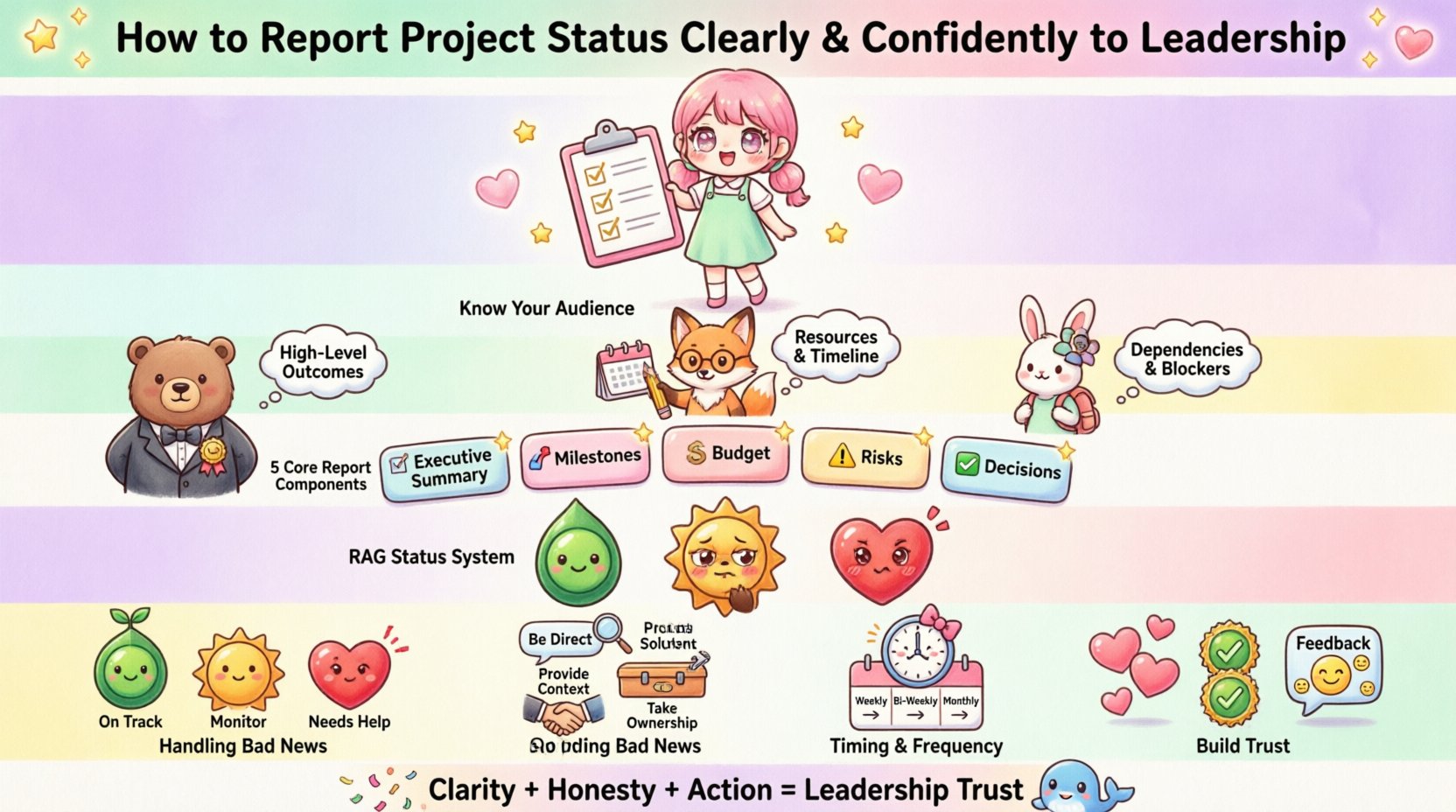
🧠 Understanding Your Audience and Their Needs
Before writing a single word, you must understand who will read your report. Different levels of leadership require different levels of detail. A status report that satisfies a technical team lead will likely overwhelm a Chief Executive Officer. Tailoring your communication ensures your message lands effectively.
- Executive Leadership: Focus on high-level outcomes, financial impact, and strategic alignment. They need to know if the project is on track to deliver value and if risks threaten the bottom line.
- Sponsor Leadership: They care about resource allocation, timeline adherence, and decision points. They are often the ones who need to approve changes or provide additional funding.
- Functional Managers: They need to know about team capacity, cross-departmental dependencies, and specific blockers affecting their staff.
When you address the specific needs of your audience, you demonstrate emotional intelligence and professional maturity. It shifts the dynamic from “reporting tasks” to “driving business value.”
📋 The Core Components of a High-Impact Report
A robust status report should answer the fundamental questions every stakeholder asks: Are we on track? What is the risk? What do we need from you? Avoid listing every task completed; instead, synthesize information into meaningful insights.
1. Executive Summary
This is the most important section. Many leaders will only read this. It should summarize the current state in three to five sentences. State the overall health, highlight the most significant achievement of the period, and flag the most critical issue immediately.
2. Progress Against Milestones
Link current activities to the major milestones defined in the project charter. Use clear language to indicate completion status. Instead of saying “Started the testing phase,” say “Testing phase initiated; 15% of cases executed.”
3. Budget and Resource Status
Financial transparency is non-negotiable. Report the budget burn rate against the allocated funds. If there are variances, explain the cause. Similarly, outline resource utilization. Are you over-allocated? Under-utilized? Do you need to request additional headcount?
4. Risks and Issues
Distinguish between a risk (something that might happen) and an issue (something that is happening). List the top three risks and their mitigation strategies. For issues, state the impact and the proposed resolution.
5. Decisions Required
Do not leave leadership guessing. Clearly list any decisions they must make to move forward. Provide context for the decision, the options available, and your recommendation. This empowers them to act quickly.
📈 Visualizing Data Without Software Constraints
While specific tools vary, the principles of visual data representation remain constant. Visuals allow leaders to grasp the project health at a glance. Use simple, universal indicators to convey status.
The RAG Status System
The Red, Amber, Green (RAG) status is a widely understood convention. However, definitions must be consistent across the organization. A “Green” status does not mean “everything is perfect.” It means “on track with no significant blockers.”
| Color | Status Definition | Required Action |
|---|---|---|
| 🟢 Green | On track. No major risks. Budget and timeline within acceptable variance. | No action required. Continue monitoring. |
| 🟡 Amber | At risk. Minor issues exist but have mitigation plans. Potential impact on timeline or budget. | Monitor closely. Provide updates on mitigation progress. |
| 🔴 Red | Off track. Critical issues blocking progress. Significant impact on deliverables. | Immediate attention required. Escalate issues and request support. |
When using this system, ensure you explain the “Why.” A red status is not a failure; it is a signal for intervention. Hiding a red status behind a green one is a breach of trust.
🗣️ Handling Bad News with Professionalism
Bad news travels faster than good news in organizations. The instinct is often to delay reporting negative status until it can be fixed. This is a strategic error. Surprise is the enemy of leadership confidence. Delivering bad news early allows the organization to pivot and mitigate damage.
- Be Direct: State the problem clearly. Avoid euphemisms like “challenges” when the word “delay” is accurate. Clarity is kindness.
- Provide Context: Explain what happened. Was it a dependency failure? A resource constraint? A technical hurdle?
- Offer Solutions: Never bring a problem without a proposed solution. Present at least two options and recommend the best path forward.
- Own the Outcome: Use “I” or “We” rather than passive voice. “We missed the deadline” is better than “The deadline was missed.”
Example of effective bad news communication:
Issue: The vendor delivery for the core module is delayed by two weeks.
Impact: This pushes the integration phase start date to next month.
Recommendation: We can parallelize the testing of the UI module to recover one week of time. We need approval to hire two contractors for this task.
This approach shows that you are in control of the situation, even when the situation is difficult.
⏰ Frequency and Timing of Updates
Consistency builds a rhythm. If you send reports sporadically, stakeholders will not know when to expect information. Establish a standard cadence that aligns with the project’s urgency.
- Weekly: Standard for active projects. Focus on recent progress and immediate next steps.
- Bi-Weekly: Suitable for maintenance or slower-moving phases. Allows for more significant chunking of work.
- Monthly: Appropriate for steering committees or high-level executive reviews. Focus on strategic shifts and budget consumption.
Timing is also crucial. Send reports early in the week so leaders can digest information before their own meetings. Avoid sending status updates late on Friday afternoons, as this delays decision-making until Monday.
🛑 Common Mistakes to Avoid
Even experienced project managers can fall into communication traps. Identifying these pitfalls helps you refine your approach.
- Too Much Detail: Do not include every meeting note or minor task. Leaders do not have time for granular execution data. Summarize.
- Surprise Bad News: As mentioned, hiding issues destroys credibility. If a status is red, report it immediately.
- Vague Language: Avoid words like “soon,” “maybe,” or “approximately.” Use specific dates and percentages.
- Ignoring Stakeholders: Do not assume everyone on the list needs the same information. Segment your distribution list if necessary.
- Missing the Ask: If you need a decision, make it bold. Highlight it at the top of the document.
🤝 Building Trust Through Consistency
Trust is the currency of project management. It is built over time through reliable communication. When your reports are accurate, timely, and honest, leadership will trust your judgment. This trust grants you autonomy. If you are known for surfacing issues early and managing them effectively, leaders are more likely to give you leeway in how you manage the work.
To maintain this trust:
- Verify Data: Ensure numbers are accurate before sending. Do not guess.
- Follow Through: If you say you will provide an update by Friday, do it by Friday.
- Be Human: Acknowledge the team’s effort. Celebrate wins publicly. This balances the narrative of constant risk management.
- Solicit Feedback: Ask stakeholders periodically if the format and content meet their needs. Adapt based on their responses.
💡 Strategies for Verbal Updates
Written reports are essential, but verbal updates in meetings are equally critical. The dynamics of a live presentation require different skills.
- Start with the Bottom Line: Begin the meeting with the status. Do not build up to it.
- Prepare for Questions: Anticipate the tough questions. Have the data ready to back up your claims.
- Manage the Room: If a discussion goes off-topic, gently steer it back. “That is a valid point, but let us park it for the next agenda item so we can finish the status review.”
- Use Silence: After presenting a critical issue, pause. Let the information sink in before moving to the next slide.
🔄 Continuous Improvement of the Process
A status reporting framework is not static. It should evolve as the project matures. At the start, you might need frequent, detailed reports. Near the end, you might shift to milestone-based updates. Periodically review the effectiveness of your communication.
Ask yourself:
- Did leadership ask for information that was not in the report?
- Did they miss information that was included?
- Is the report too long to read?
- Are the decisions requested being made in a timely manner?
Adjust the template and frequency based on these observations. A flexible approach shows adaptability.
📝 Final Thoughts on Leadership Communication
Reporting project status is not merely an administrative task; it is a strategic function. It aligns execution with vision. By focusing on clarity, honesty, and actionable insights, you transform the status report from a chore into a tool for influence. Leadership needs to know where the project stands to make informed decisions. Your role is to provide that clarity without ambiguity.
Remember that confidence comes from preparation. Know your numbers. Know your risks. Know your team. When you speak with authority and data, your message carries weight. This discipline pays dividends throughout the lifecycle of the project and beyond.
Implement these practices consistently. Over time, you will find that your reports open doors rather than close them. You will be seen not just as a manager of tasks, but as a steward of business outcomes.