
Launching a new initiative is a pivotal moment for any organization. It marks the transition from planning to execution, setting the tone for collaboration, efficiency, and delivery. A successful start lays the groundwork for the entire lifecycle of the work. Without a structured approach, teams often find themselves navigating ambiguity, conflicting priorities, and resource gaps. This guide outlines the essential steps to ensure your project begins with clarity and momentum.
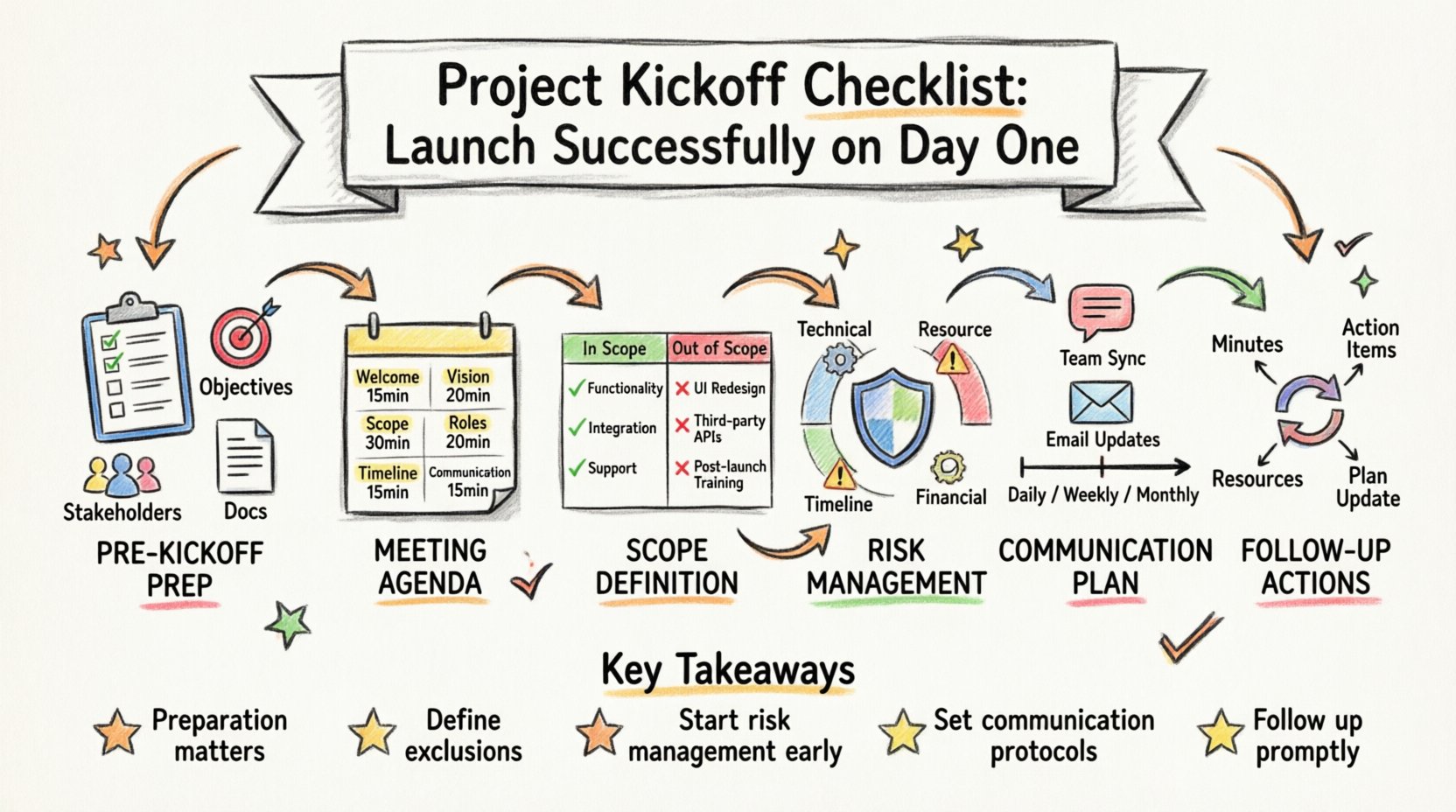
Why the Kickoff Matters ⚙️
The kickoff meeting is not merely a formality or a chance to introduce faces. It is a strategic alignment session that defines the shared understanding of the work ahead. Research and industry data consistently show that projects with clear kickoffs experience fewer scope creep incidents and higher stakeholder satisfaction rates. It serves as the official contract between the team, leadership, and clients.
Alignment: Ensures everyone understands the same goals.
Authority: Empowers the project lead to make decisions.
Momentum: Creates immediate energy and commitment.
Risk Reduction: Identifies potential blockers early.
Skipping this phase often leads to miscommunication later. When assumptions are not challenged at the start, they become fixed errors by the end. A robust checklist mitigates these risks by forcing a review of critical information before work commences.
Pre-Kickoff Preparation 📝
Before inviting stakeholders to the first meeting, the project management team must complete several critical tasks. Rushing into a meeting without preparation often results in a session that lacks direction. This phase involves gathering data, defining the initial boundaries, and ensuring the right people are present.
1. Define the Core Objectives
Clarity on the “Why” is the foundation of the “What.” You must articulate the business value this project delivers. Is it revenue generation, cost reduction, regulatory compliance, or customer experience improvement? Vague objectives lead to vague outcomes.
Document the primary business case.
Identify measurable success criteria (KPIs).
Establish what constitutes “done” for the initial phase.
2. Identify Key Stakeholders
Not everyone needs to be in the room, but the right voices must be there. Use a stakeholder mapping technique to categorize individuals by their influence and interest. This ensures you have decision-makers present and those affected by the output are informed.
Executives: Provide resources and strategic direction.
Sponsors: Champion the project and remove roadblocks.
Subject Matter Experts: Provide technical or domain knowledge.
End Users: Represent the customer perspective.
3. Prepare the Initial Documentation
While the project charter might still be evolving, you need a baseline document to present. This should include the high-level scope, timeline expectations, and budget constraints. Having these materials ready demonstrates professionalism and readiness.
The Pre-Meeting Checklist ✅
To streamline the preparation phase, use the following table to verify readiness before sending calendar invitations.
Task | Status | Owner |
|---|---|---|
Confirm budget allocation | Pending | Finance Lead |
Secure meeting room or virtual link | Pending | Project Coordinator |
Distribute pre-read materials | Pending | Project Manager |
Confirm attendee availability | Pending | Project Manager |
Review initial risk register | Pending | Risk Lead |
Define communication channels | Pending | Comms Lead |
The Kickoff Meeting Agenda 🗓️
The kickoff meeting should be structured to maximize engagement and information transfer. Avoid long presentations that put attendees to sleep. Instead, foster interaction and discussion. The goal is to leave the room feeling informed and ready to contribute.
1. Welcome and Introductions (15 Minutes)
Start with a brief icebreaker to humanize the team. Everyone should state their name, role, and one personal professional interest. This builds rapport, which is crucial for collaboration during stressful periods later.
2. Project Vision and Business Case (20 Minutes)
Present the high-level goals. Explain why this work matters to the organization. Connect the project deliverables to the broader organizational strategy. If the team understands the impact, they are more likely to remain motivated.
3. Scope and Deliverables Review (30 Minutes)
Walk through what is included in the project and, equally important, what is out of scope. Ambiguity in scope is the leading cause of budget overruns. Use the table below to clarify boundaries.
Category | In Scope | Out of Scope |
|---|---|---|
Functionality | Core reporting features | Mobile app version |
Integration | ERP system | Legacy CRM |
Support | Training for admins | End-user training |
4. Roles and Responsibilities (20 Minutes)
Clarify who does what. Confusion over ownership leads to duplicated efforts or tasks falling through the cracks. Use a RACI model (Responsible, Accountable, Consulted, Informed) to define these relationships clearly.
Accountable: The person who says yes or no.
Responsible: The person doing the work.
Consulted: The person providing input.
Informed: The person receiving updates.
5. Timeline and Milestones (15 Minutes)
Review the high-level schedule. Highlight critical path milestones that must be met to stay on track. Discuss dependencies between teams or external vendors. This sets realistic expectations regarding delivery dates.
6. Communication Plan (15 Minutes)
Define how the team will stay connected. This includes the frequency of status updates, the tools used for documentation, and the protocol for escalation. Clear communication rules prevent information silos.
Status Meetings: Weekly syncs on Tuesdays at 10 AM.
Documentation: All decisions logged in the central repository.
Escalation: Issues unresolved in 48 hours go to the Sponsor.
Defining Scope and Deliverables 🎯
Scope definition is the most critical part of the kickoff. It protects the team from scope creep and protects the stakeholders from missed expectations. A well-defined scope acts as a boundary line for the work.
1. Functional Requirements
List the specific features or capabilities the output must possess. Avoid technical jargon where possible to ensure business stakeholders understand the implications.
2. Non-Functional Requirements
These are the quality attributes. Performance, security, reliability, and usability standards must be agreed upon early. A fast feature that crashes frequently fails the project.
3. Constraints and Assumptions
Document any limitations (budget, time, technology) and assumptions (market conditions, resource availability). If an assumption proves false later, the scope plan needs adjustment.
Risk Management and Contingency 🛡️
No project is immune to issues. A proactive approach to risk management distinguishes experienced teams from novices. During the kickoff, identify the top risks and discuss mitigation strategies.
Common Risk Categories
Technical: Legacy systems, integration failures, or technology debt.
Resource: Staff turnover, skill gaps, or competing priorities.
Timeline: Vendor delays, regulatory changes, or scope expansion.
Financial: Currency fluctuation, budget cuts, or cost overruns.
Developing a Response Plan
For each high-priority risk, assign an owner. Determine the probability and impact. Create a contingency plan that outlines what to do if the risk materializes. This reduces panic when issues arise.
Communication Plan Setup 📢
Communication is the lifeline of a project. Without it, progress is invisible. Establishing a protocol during the kickoff ensures that everyone knows where to find information and how to report problems.
1. Channels and Tools
Decide on the platforms for different types of communication. Email is good for formal records. Instant messaging is good for quick questions. Project management software tracks tasks. Avoid fragmentation by agreeing on a single source of truth for documentation.
2. Meeting Cadence
Set the rhythm for updates. Too many meetings waste time; too few leave people in the dark. A standard cadence might include:
Daily Stand-up: 15 minutes, team sync.
Weekly Status: 1 hour, progress and blockers.
Monthly Steering: 1 hour, strategic alignment with leadership.
3. Reporting Structure
Define what gets reported and to whom. Dashboards should highlight key metrics such as budget burn rate, milestone completion, and open risks. Visual data helps stakeholders grasp the health of the project quickly.
Post-Meeting Follow-up Actions 🔄
The kickoff does not end when the meeting adjourns. The follow-up phase solidifies the agreements made and ensures accountability.
Distribute Minutes: Send a summary of decisions within 24 hours.
Update Project Plan: Reflect the agreed scope and timeline in the master schedule.
Assign Action Items: Clearly list who is doing what by when.
Share Resources: Provide access to necessary repositories and tools.
Failure to follow up often leads to forgotten commitments. The written record serves as a reference point for future disputes or clarification.
Common Pitfalls to Avoid ⚠️
Even with a checklist, teams can stumble. Be aware of common mistakes that undermine the kickoff process.
1. Skipping the “Out of Scope” Discussion
It is tempting to say yes to everything to please stakeholders. However, this creates a trap. Explicitly stating what you will not do protects the team’s capacity.
2. Overloading the Agenda
Trying to solve every problem in one meeting leads to fatigue. Focus on alignment and high-level planning. Detailed technical discussions can happen in working sessions later.
3. Ignoring Cultural Differences
Global teams have different communication styles. Some cultures value directness, while others prefer indirectness. Adapting your communication style ensures inclusion and understanding.
4. Failing to Secure Executive Support
If leadership is not visibly committed, the project loses priority. Ensure sponsors attend or send a recorded message of support to validate the initiative.
Measuring Success After Launch 📊
How do you know the kickoff was effective? Look for indicators of momentum in the weeks following the meeting.
Speed of Execution: Are tasks moving forward without bottlenecks?
Stakeholder Engagement: Are people attending meetings and providing feedback?
Clarity of Direction: Is the team confident in their next steps?
Issue Resolution: Are blockers being removed quickly?
If the team is working in silos or frequently asking for clarification on the basics, the kickoff needs to be revisited. Continuous improvement applies to the process as well as the product.
Final Thoughts on Project Readiness 🌟
A successful project launch is built on preparation, clarity, and communication. By following a structured checklist, teams can navigate the complexities of execution with greater confidence. The goal is not just to start fast, but to start right. Investing time in the kickoff phase pays dividends throughout the entire lifecycle.
Remember that flexibility is key. Plans will change, but the foundation of alignment remains constant. Keep the lines of communication open, respect the defined scope, and prioritize the team’s well-being. With these practices in place, the path to delivery becomes much clearer.
Key Takeaways 📌
Preparation is more important than the meeting itself.
Scope definition must include clear exclusions.
Risk management should begin before work starts.
Communication protocols prevent isolation.
Follow-up actions solidify initial agreements.
Use this guide as a reference for your next initiative. Adapt the steps to fit your specific context, but keep the core principles of alignment and clarity at the center. Success is a deliberate process, not an accident.