
Every organization dreams of flawless execution. Yet, the reality often presents a different narrative. Across industries, from construction to software development, projects frequently miss deadlines, exceed budgets, or fail to meet objectives. Understanding why projects fail is not merely an academic exercise; it is a critical survival skill for leadership teams.
This analysis delves into the anatomy of project breakdowns. By examining real-world scenarios and underlying causes, we can identify patterns that signal trouble before it becomes catastrophe. We will look beyond surface-level symptoms to the root structural issues that cause initiatives to unravel.
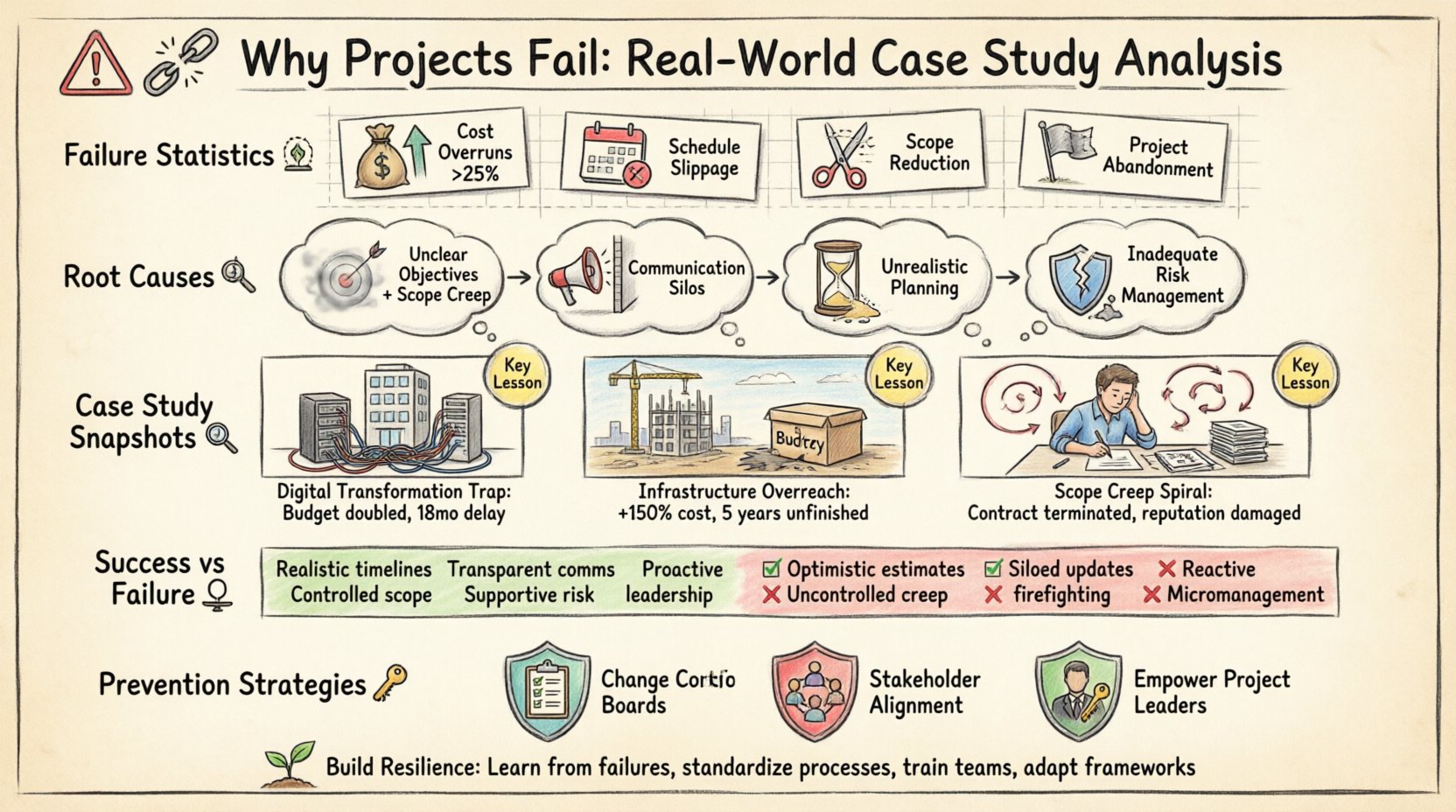
Factor
Successful Projects ✅
Failed Projects ❌
Planning
Realistic timelines with buffers
Optimistic estimates without buffers
Communication
Transparent, frequent updates
Siloed, sporadic, or hidden delays
Scope
Strictly controlled changes
Uncontrolled scope creep
Risk
Proactive mitigation plans
Reactive firefighting
Leadership
Supportive and accessible
Distant or micromanaging
Team
Clear roles and responsibilities
Ambiguity in ownership
Building Resilience for Future Initiatives 🌱
Failure is often a teacher, but only if we listen to the lessons it provides. Organizations must shift from a blame culture to a learning culture. When a project fails, the post-mortem analysis should not focus on who made the mistake, but rather on what systemic gap allowed the mistake to occur.
Resilience is built by:
Standardizing Processes: Create templates for initiation and planning that force critical thinking.
Training Teams: Invest in training for project management methodologies and soft skills.
Reviewing Past Projects: Maintain a repository of lessons learned from previous successes and failures.
Adapting Frameworks: Be willing to adjust the methodology based on the specific nature of the project. Agile, waterfall, or hybrid approaches should be chosen based on fit, not habit.
Final Considerations on Project Governance 🔍
Ultimately, the success of an initiative relies on the quality of the governance surrounding it. This includes how decisions are made, how resources are allocated, and how progress is measured. Without a strong framework, even the most talented teams can struggle to deliver.
By acknowledging the realities of project management—uncertainty, human error, and external pressures—leaders can build more robust systems. The goal is not to eliminate failure entirely, which is impossible, but to minimize its frequency and impact.
When teams approach work with a mindset of continuous improvement and honest assessment, they create an environment where success becomes the probable outcome rather than a lucky accident. Analyzing past breakdowns provides the map for navigating future challenges.