


Welcome to the definitive resource for understanding, applying, and mastering the C4 Model—the lightweight, clear, and efficient approach to visualizing software architecture.
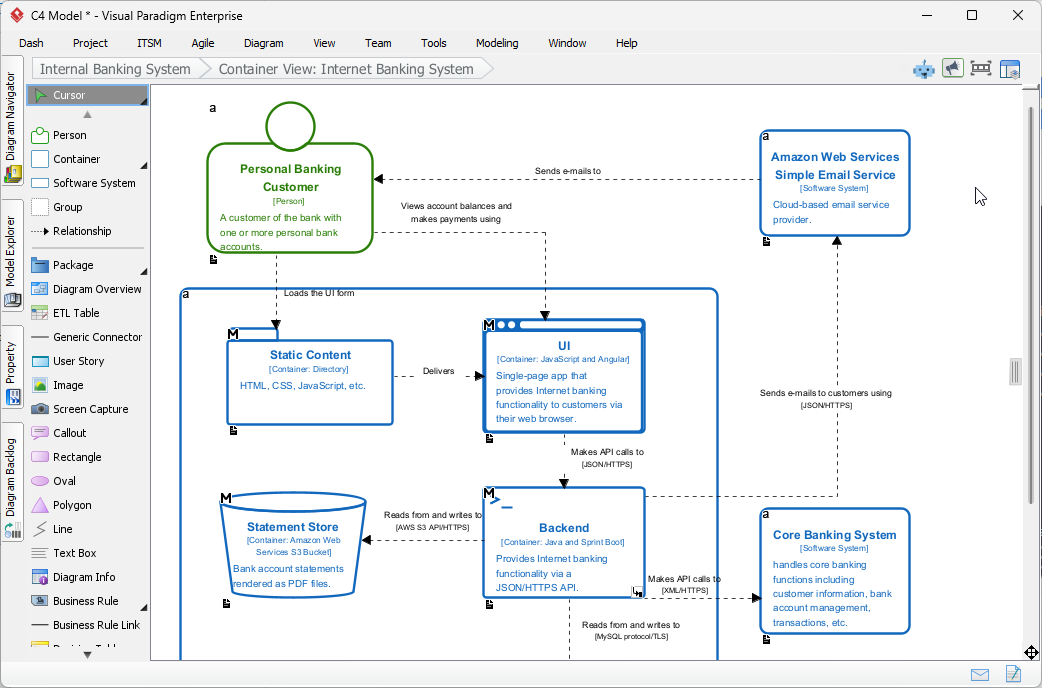
In today’s complex, distributed systems world, getting everyone—from developers and business analysts to stakeholders and clients—on the same page is challenging. The C4 Model solves this by providing four layers of abstraction that progressively zoom in on the system, making complex architectures immediately comprehensible.
This hub page provides the foundational knowledge you need and serves as a roadmap to our full suite of detailed articles, guides, and practical examples.
1. Foundation: What is the C4 Model?
The C4 Model is a set of hierarchical diagrams used to describe, communicate, and document software architecture. Developed by Simon Brown, C4 stands for Context, Containers, Components, and Code. It is designed to strike a balance between the simplicity of boxes-and-lines and the rigor of formal notations like UML, ensuring clarity for diverse audiences.
Why the C4 Model Matters
Traditional diagramming methods often fail because they are either too vague or too complex. C4 ensures that every diagram is useful to its intended audience by providing the right level of detail at the right time.
- Context: For the whole team and stakeholders.
- Containers: For delivery and operations teams.
- Components: For development teams.
- Code: For individual developers.
2. Deep Dive into the C4 Model
To truly master the C4 Model and understand its role in modern development, explore our detailed articles below.
Foundation: Essential Information
These articles provide the essential knowledge to build a strong foundation in C4 concepts, use cases, and best practices.
- C4 Model Explained: How the Four Levels Work Together in Software Architecture
- Why the C4 Model Important: The Benefits of Modern Architecture Documentation
- C4 vs UML: How the C4 Model complements—and sometimes replaces—traditional UML
- C4 in 2025: Trends and Adoptions: How the model is evolving to meet the demands of cloud-native and microservice architectures
- 10 Misunderstandings About C4: Clarifying common myths and ensuring you use the model correctly from day one
- FAQ About C4: Quick answers to the most common questions from architects and engineers
- The Diagram Types in C4: A detailed guide to the four official C4 diagram types and how to use them effectively
Why Tool, Why AI, About Diagramming
Transitioning from theory to practice, this group explains how modern tooling and Artificial Intelligence dramatically simplify C4 diagramming.
- Why You Need a Diagram Tool (and Not Just a Whiteboard): The limitations of manual drawing and the benefits of professional tooling for maintenance and collaboration.
- Why AI? The Future of Software Architecture Modeling: How Large Language Models (LLMs) and conversational interfaces are removing the friction of manual diagram creation.
- Creating C4 Diagrams with the Chatbot: A step-by-step introduction to using our powerful AI-driven tool to generate C4 models instantly.
Application & Examples
Practical, real-world examples that demonstrate the model in action and implicitly showcase the speed and clarity delivered by our AI Chatbot.
- C4 Example: ATM (Automated Teller Machine) System: A full walkthrough of the Context, Container, and Component diagrams for a standard ATM.
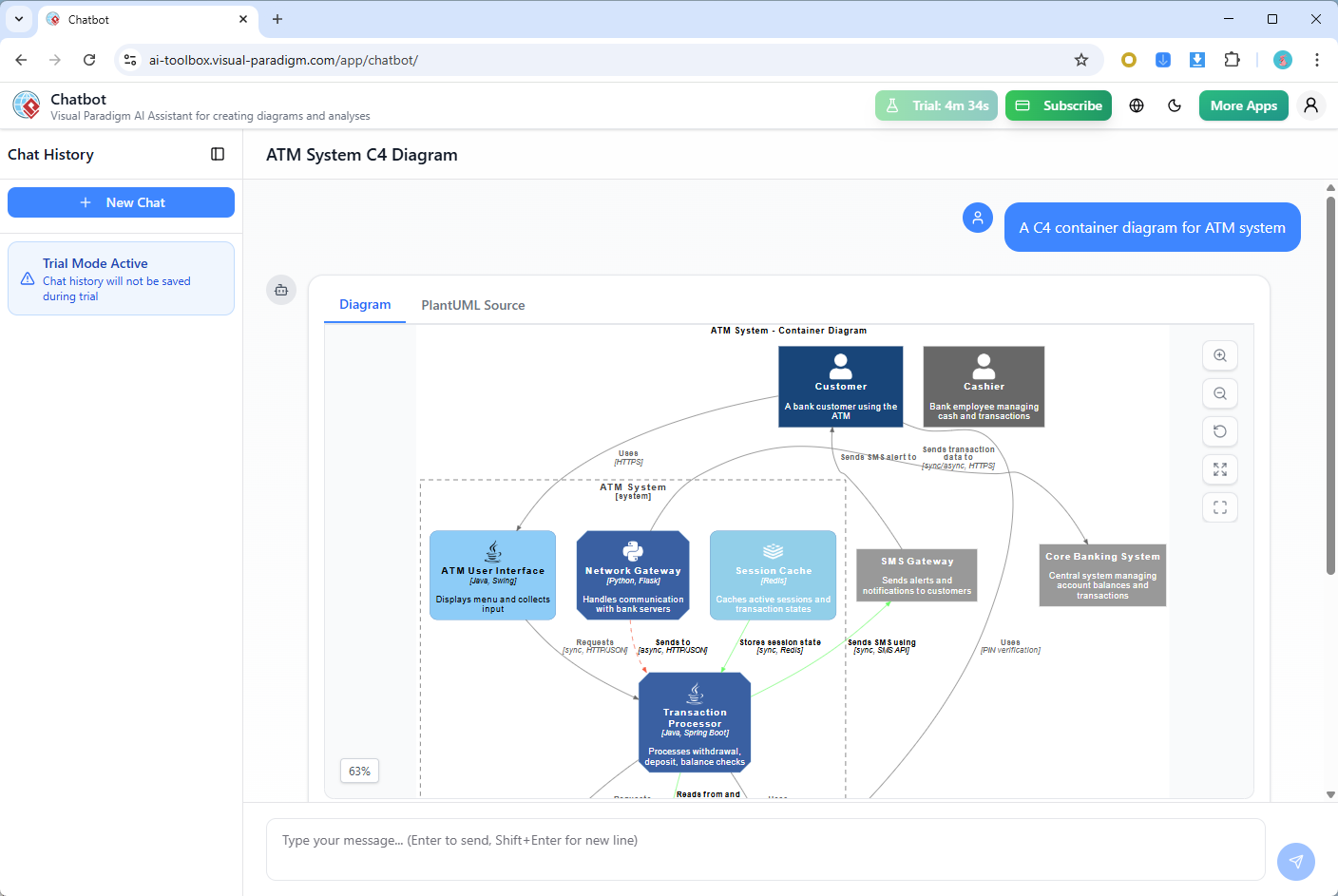
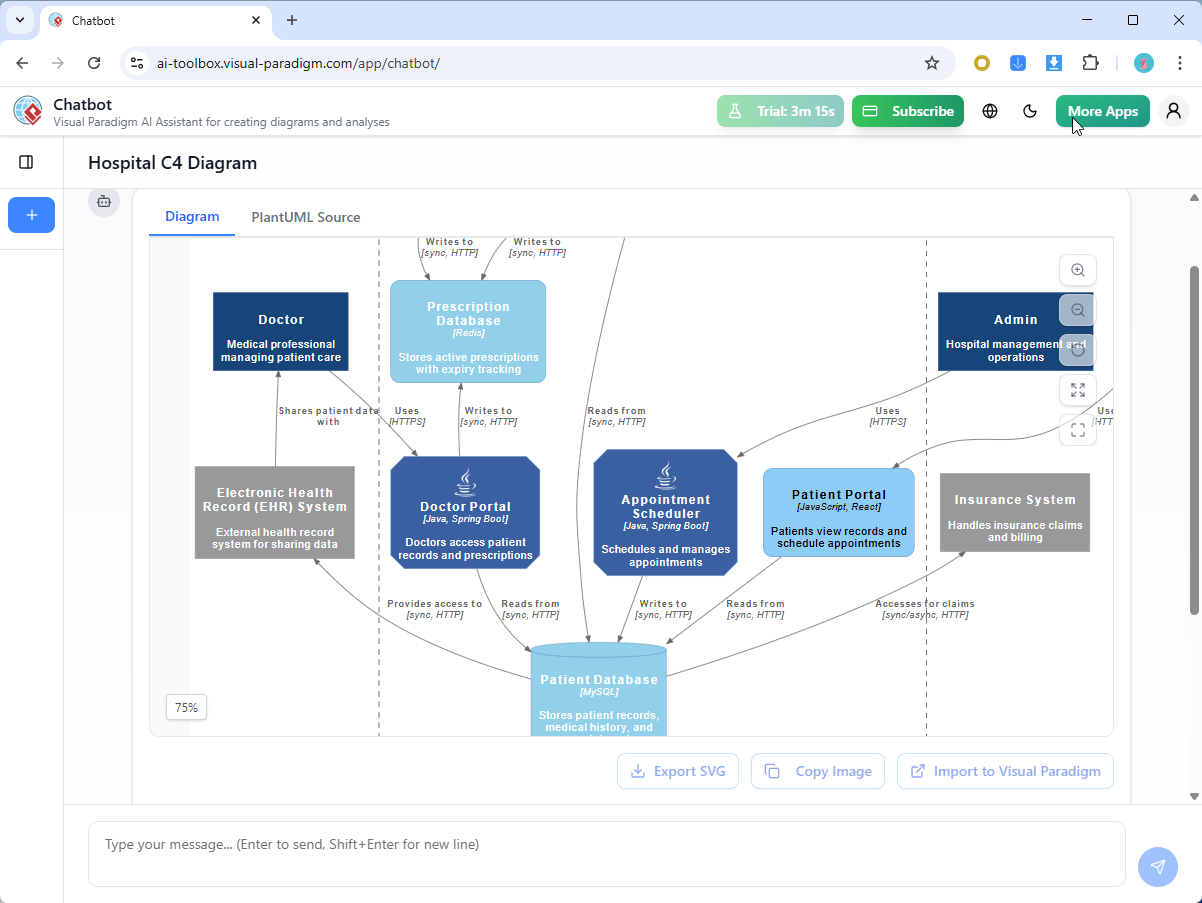
- C4 Example: Hospital Management System: Modeling a complex, multi-layered healthcare system using the four C’s for clear communication.
3. Accelerate Your Architecture Documentation with AI
If the idea of generating accurate, professional, and presentation-ready C4 diagrams in seconds sounds appealing, the use of a specialized diagram generator, such as AI Chatbot, can transform your workflow.
You can simply describe your system in plain English—for example, “Generate a System Context Diagram for a food delivery app with a customer mobile app, a restaurant web portal, a cloud database, and a third-party payment system”—and watch the architecture materialize instantly.
Related C4 Tools
- Visual Paradigm
- Visual Paradigm Online
For details please check out how you can use Visual Paradigm’s C4 toolset to model your system.