


Effective leadership requires a delicate balance between visibility and autonomy. When team members feel their work is being watched too closely, trust erodes and motivation drops. Conversely, if there is no oversight, projects can drift off course without warning. The goal is to implement a system where progress is clear and accountability is inherent, without resorting to constant interference. This guide explores practical strategies for monitoring project health while maintaining team dignity and independence. 🛡️
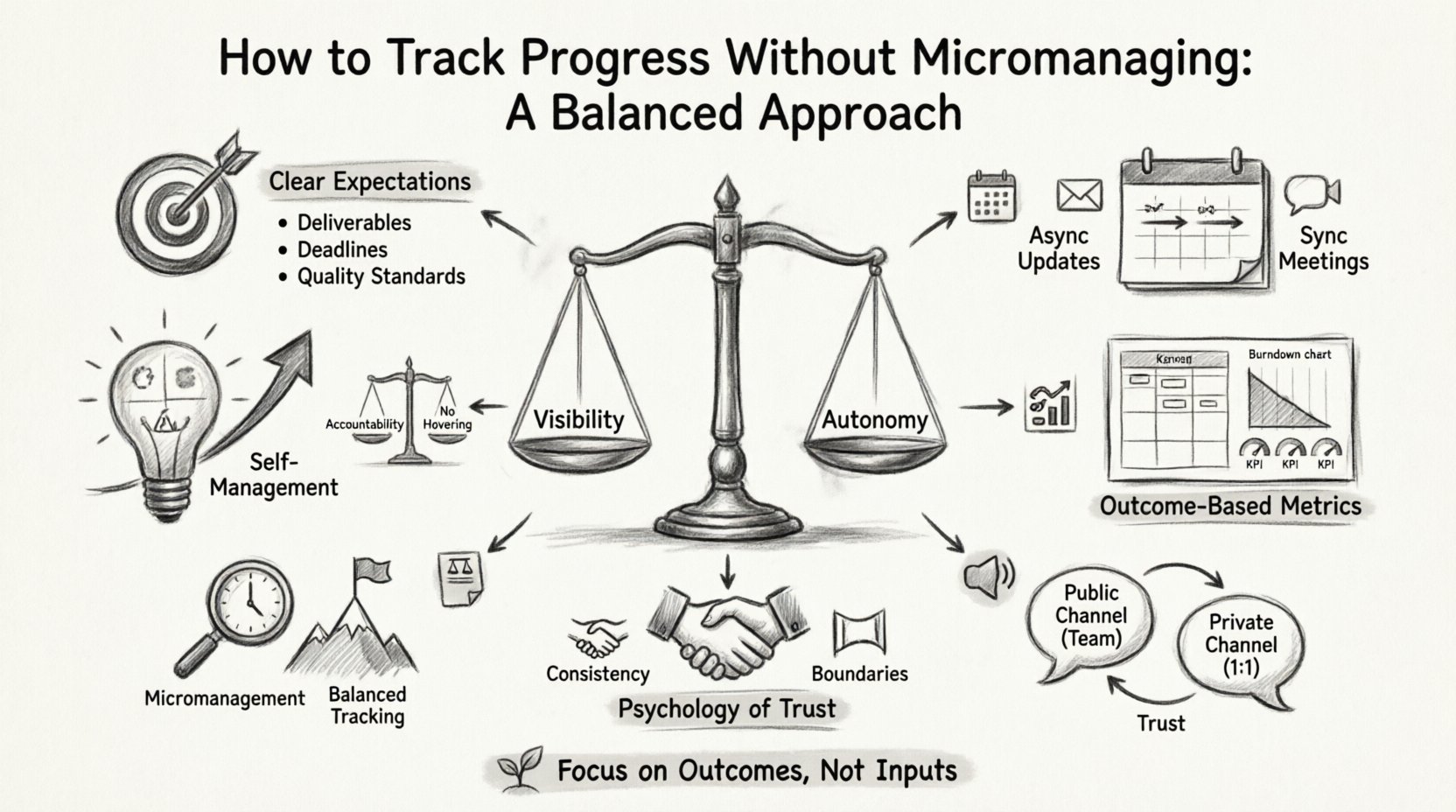
Understanding the Core Tension: Visibility vs. Control 👀
The root of the micromanagement problem often lies in the leader’s need for certainty. However, certainty does not require control. In modern project management, the focus should shift from watching inputs to evaluating outputs. When you track progress, you are gathering data to make better decisions, not policing every action. Distinguishing between these two mindsets is the first step toward a healthier workflow.
Tracking: Collecting information on milestones, deliverables, and timelines to ensure alignment with goals.
Micromanaging: Dictating how tasks are performed, checking in excessively, and intervening in minor details.
Autonomy: Empowering team members to decide the best path to achieve the agreed-upon result.
When you shift your focus to outcomes rather than processes, you create space for innovation. Team members who know you trust them are more likely to take ownership. This psychological safety is crucial for high performance. 🚀
Setting Clear Expectations as the Foundation 🎯
Most tracking issues stem from vague goals. If a team member does not know exactly what success looks like, they will ask for clarification repeatedly, leading to friction. Establishing clear expectations upfront reduces the need for constant check-ins. This involves defining deliverables, deadlines, and quality standards before work begins.
Defining Success Metrics
Before assigning a task, clarify the definition of done. This prevents the scenario where a team member finishes a task, but it does not meet the actual requirement. Use specific criteria to measure completion.
Output Quality: What does the final product look like?
Timeline: When is the deliverable due?
Resources: What budget or tools are available?
Constraints: Are there specific regulations or limitations to follow?
Documenting Agreements
Written records serve as a reference point for both parties. When expectations are documented, there is less room for misinterpretation. This documentation acts as a shield against micromanagement because the standard is already set. Both the manager and the employee can refer back to the plan to verify progress without needing to ask for permission.
Choosing the Right Cadence for Updates 🗓️
Frequency of communication is a common friction point. Too little contact leads to surprise failures; too much contact feels like surveillance. Finding the right rhythm depends on the complexity of the project and the experience level of the team.
Asynchronous vs. Synchronous Check-ins
Not every update needs a meeting. Asynchronous communication allows team members to report progress when it fits their workflow. This reduces interruptions and allows for deep work.
Written Updates: Use text-based summaries for daily or weekly progress. This allows the team to read at their own pace.
Live Meetings: Reserve synchronous time for complex problem-solving or relationship building, not routine status reporting.
Automated Notifications: Configure systems to alert only when thresholds are breached, such as missed deadlines or budget overruns.
The Stand-up Meeting Nuance
Short daily meetings can be effective if they are focused. The purpose is to identify blockers, not to report every minute spent on a task. Keep the group small and the time box tight. This ensures that the meeting remains a tool for alignment rather than a venue for oversight.
Implementing Outcome-Based Metrics 📉
Tracking hours logged is a classic indicator of micromanagement. It measures presence, not productivity. Instead, focus on the value delivered. This approach shifts the conversation from “how long did you work” to “what did you achieve”.
Key Performance Indicators for Projects
Use metrics that reflect business value. These indicators should be visible to the whole team to foster transparency.
Completion Rate: Percentage of planned tasks finished within the sprint or phase.
Velocity: The amount of work completed over a specific period.
Quality Metrics: Error rates, bug counts, or client satisfaction scores.
Time to Market: How quickly a feature moves from idea to production.
Visualizing Progress
Visual dashboards provide instant clarity without requiring a conversation. When everyone can see the status of a project, the need for individual inquiries decreases. Transparency reduces anxiety for both leaders and contributors.
Kanban Boards: Show the flow of work from “To Do” to “Done”.
Gantt Charts: Illustrate dependencies and timelines.
Burndown Charts: Track remaining work against time.
Communication Channels That Build Trust 🗣️
The medium you choose for updates matters. Public channels encourage accountability, while private channels can feel like scrutiny. Establishing norms around where communication happens helps maintain boundaries.
Public vs. Private Channels
Keep routine updates in shared spaces. This allows peers to see progress and offer help without needing direct permission. Private messages should be reserved for sensitive topics or personal feedback.
Public Channels: General project discussions, status updates, and resource sharing.
Private Channels: One-on-one feedback, conflict resolution, and personal matters.
Feedback Loops
Feedback should be a two-way street. Leaders should also be open to feedback about the tracking process itself. If the current system feels intrusive, the team should feel safe to suggest changes. This creates a culture of continuous improvement.
Handling Deviations and Roadblocks 🚧
When things go off plan, the reaction determines whether you are managing or controlling. A supportive response focuses on solving the problem together. A controlling response focuses on assigning blame or demanding an explanation.
Proactive Risk Management
Encourage team members to report delays early. If they know they will be supported rather than punished, they are more likely to speak up. Early detection allows for course correction before the issue becomes critical.
Early Warning Systems: Identify signals that indicate a delay is likely.
Contingency Plans: Have backup options ready for high-risk tasks.
Resource Reallocation: Be willing to shift resources if a bottleneck occurs.
The Psychology of Trust 🤝
Trust is the currency of effective management. Without it, tracking becomes a surveillance tool. With it, tracking becomes a supportive mechanism. Building trust requires consistency, transparency, and respect for boundaries.
Consistency in Expectations
Do not change the rules arbitrarily. If deadlines shift or goals change, explain the reasoning. Consistency builds a sense of fairness and predictability.
Respecting Boundaries
Do not expect immediate responses outside of working hours. Respect the time team members spend away from their devices. This respect is reciprocated by their commitment during work hours.
Micromanagement vs. Balanced Tracking: A Comparison 📋
To clarify the distinction, consider the following comparison of behaviors. Understanding the difference helps in self-assessment and team coaching.
Aspect | Micromanagement | Balanced Tracking |
|---|---|---|
Focus | How the work is done | What the work achieves |
Frequency of Contact | Multiple times daily | Agreed upon intervals |
Feedback Style | Corrective and critical | Constructive and supportive |
Decision Making | Centralized at the top | Decentralized to the team |
Reaction to Errors | Punitive | Problem-solving |
Communication | Private and secretive | Transparent and public |
Developing Self-Management Skills in the Team 🧠
The ultimate goal is to move toward a state where the team manages itself. This requires investing in the development of individual organizational skills. When team members are equipped to manage their own time and priorities, the need for external tracking diminishes.
Training in Prioritization
Teach methods for organizing work. Techniques such as prioritization matrices or time-blocking help individuals focus on high-value tasks without constant direction.
Encouraging Self-Reporting
Ask team members to report their own progress before you ask for it. This fosters ownership and ensures they are aware of their own status. It shifts the dynamic from being asked to volunteering information.
Cultivating a Growth Mindset
Frame challenges as opportunities to learn rather than failures to avoid. When mistakes are viewed as learning moments, the fear of being tracked decreases. This psychological safety encourages honest reporting.
Scaling the Approach for Larger Teams 🏢
As teams grow, the complexity of tracking increases. What works for a small group may not scale. In larger organizations, structure and automation become more important to maintain balance.
Layered Management
Introduce intermediate levels of leadership to handle day-to-day oversight. This keeps senior leaders focused on strategy while allowing managers to handle operational details. Ensure each layer has clear boundaries to prevent bottlenecks.
Standardized Reporting
Use standardized templates for status updates. This reduces the time spent writing reports and makes it easier to compare progress across different teams. Consistency allows for faster decision-making.
Automated Workflows
Where possible, let systems handle the tracking. Automated alerts for deadlines or status changes reduce the need for manual checking. This frees up human energy for meaningful interaction.
Addressing Resistance to Change 🔄
Shifting from a controlling style to a tracking style can be met with resistance. Some team members may be used to being told exactly what to do. Others may fear that less oversight means less support.
Managing the Transition
Communicate the benefits of the new approach clearly. Explain that this change is designed to empower them, not to abandon them. Provide support during the transition period to ensure they feel secure.
Explain the Why: Share the reasoning behind the shift in management style.
Offer Support: Be available for questions and guidance as the new habits form.
Monitor the Impact: Watch for signs of stress or confusion and adjust accordingly.
Maintaining Accountability Without Control ⚖️
Accountability is essential for success, but it does not require control. Accountability is about owning the result, while control is about dictating the process. You can enforce accountability through clear expectations and consequences, without hovering over every step.
Consequences of Missed Goals
Define what happens if goals are missed. This should be a pre-agreed process, not a surprise. Knowing the consequences upfront motivates team members to stay on track without needing reminders.
Recognition of Success
Publicly acknowledge when goals are met. Recognition reinforces the behavior you want to see. It validates the team’s autonomy and encourages continued high performance.
Final Thoughts on Sustainable Leadership 🌱
Building a system where progress is tracked without micromanagement is an ongoing process. It requires patience, consistency, and a genuine belief in the team’s capabilities. When you succeed in this balance, you create an environment where people thrive. They feel trusted, they feel valued, and they deliver better results.
The shift from control to trust is the mark of a mature organization. It takes time to build, but the rewards are significant. By focusing on outcomes, respecting boundaries, and communicating clearly, you can maintain visibility without sacrificing autonomy. This is the path to sustainable project success. 💡
Related posts:
 Project Management 101: A Beginner’s Quick Start Guide to Leading Projects with Confidence
 What Project Managers Actually Do: A Real-World Component Breakdown for Aspiring Leaders
 The Project Management Lifecycle Explained: A Comprehensive Walkthrough from Start to Finish
 7 Common Project Management Mistakes That Derail Teams (And How to Avoid Them)