


Projects do not always follow a linear path from initiation to closure. Sometimes, external pressures, internal misalignments, or unforeseen risks derail even the most carefully planned initiatives. When a project begins to show signs of significant distress, the instinct is often panic. However, recovery is a structured discipline that relies on clear thinking, decisive action, and transparent communication. This guide provides a methodical approach to diagnosing issues, stabilizing the situation, and steering the initiative back toward success.
Recovering a project is not about magic; it is about applying fundamental management principles with heightened focus. It requires stepping back from the daily grind to view the project’s health objectively. The following sections outline the essential steps to diagnose the root causes of failure, manage stakeholders, and implement a turnaround strategy.
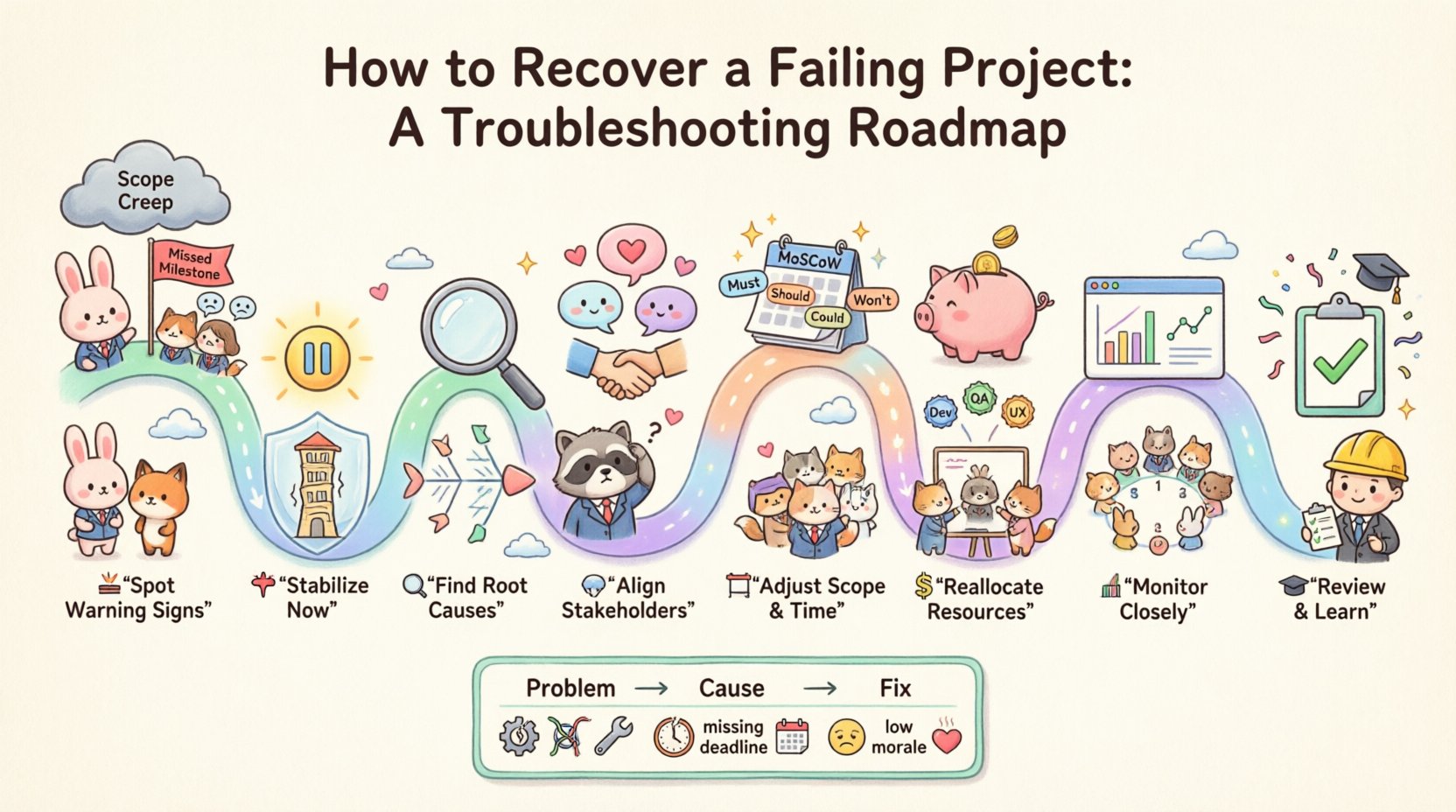
1. Identifying the Symptoms of Project Instability 🚩
Before you can fix a problem, you must understand its nature. Project failure is rarely sudden; it is usually the result of accumulated issues that have been ignored or mismanaged. Recognizing the warning signs early is the first step toward recovery.
Scope Creep: The project requirements have expanded beyond the original agreement without corresponding adjustments to budget or time.
Missed Milestones: Key deliverables are consistently delayed, indicating a breakdown in scheduling or resource allocation.
Budget Overruns: Expenditures are exceeding the allocated funds at a rate that suggests the project will run out of capital before completion.
Team Morale: Visible signs of burnout, disengagement, or high turnover among team members often signal deeper structural problems.
Communication Breakdowns: Information is not flowing effectively between stakeholders, leading to duplicated work or missed requirements.
Quality Declines: The output produced is failing to meet the defined standards, requiring rework and consuming further resources.
If you observe three or more of these indicators, the project is likely in the danger zone. A formal health check is necessary immediately.
2. Immediate Stabilization Measures 🛑
Once instability is confirmed, the priority is to stop the bleeding. You cannot build a new foundation while the old one is crumbling. Stabilization involves halting non-essential activities and freezing changes.
Freeze Scope Changes: Implement a strict change control process. No new features or requirements should be added until the current trajectory is stabilized. This prevents further dilution of resources.
Pause Non-Critical Tasks: Identify work streams that do not directly impact the core deliverables. Suspend these tasks to free up capacity for critical path activities.
Secure Leadership Backing: Ensure that senior management understands the severity of the situation. Their support is required to enforce stabilization measures and authorize necessary pivots.
Centralize Communication: Establish a single source of truth for project status. Avoid fragmented updates across multiple channels that may cause confusion.
3. Conducting a Root Cause Analysis 🔍
Addressing symptoms without understanding the cause leads to recurring issues. A root cause analysis (RCA) digs deeper than surface-level problems to find the underlying reason for the deviation.
The Five Whys: Ask “Why” five times for each major issue to drill down to the fundamental cause. For example, if a milestone was missed, ask why. If the answer is “resources were unavailable,” ask why again. This continues until you find the process or policy failure.
Fishbone Diagram: Visualize potential causes across categories such as People, Process, Technology, and Environment. This helps in identifying systemic issues rather than isolated incidents.
Retrospective Meetings: Hold sessions with the team to gather honest feedback. Focus on what went wrong in the process, not on blaming individuals.
Common root causes include unrealistic initial estimates, lack of skilled personnel, unclear requirements, or insufficient risk planning. Identifying the specific cause will dictate the recovery strategy.
4. Realigning Stakeholder Expectations 🤝
Stakeholders often have different views on what constitutes success. When a project is struggling, these views can conflict. Realigning expectations is a critical communication task.
Transparency is Key: Do not hide the bad news. Present the current status, including risks and delays, honestly. Stakeholders respect candor more than false optimism.
Define Success Criteria: Revisit the project charter. What is the minimum viable outcome required to consider the project successful? This may differ from the original vision.
Regular Status Reports: Increase the frequency of updates. Weekly or even daily briefings may be necessary during the recovery phase to maintain trust.
Manage the Narrative: Frame the recovery plan as a proactive solution rather than a reaction to failure. Focus on the path forward and the steps being taken to mitigate risk.
It is important to document all agreements regarding scope and timeline changes. Written confirmation prevents future disputes about whether a change was authorized.
5. Adjusting Scope and Timeline 📅
In many cases, recovery requires cutting the scope to fit the available resources and time. This is often the most difficult decision but the most necessary for project viability.
MoSCoW Prioritization: Categorize requirements into Must Have, Should Have, Could Have, and Won’t Have. Focus resources exclusively on the “Must Have” items.
Phased Delivery: If a full delivery is not possible, consider releasing a core version first. This provides value to users sooner while allowing additional features to be developed later.
Timeline Compression: Analyze the critical path. Are there tasks that can be done in parallel? Can any dependencies be removed without compromising quality?
Baseline Revisions: Update the project baseline to reflect the new reality. A plan that is known to be unachievable should be discarded in favor of a realistic one.
6. Reallocating Resources and Budget 💰
Resources are often the constraint that determines whether a project can be saved. You may need to bring in new skills or reallocate existing ones.
Skill Gap Analysis: Identify the specific skills missing from the team that are preventing progress. Hire contractors or assign internal staff with those specific capabilities.
Budget Reallocation: Review the budget for unused funds in other areas. Can money saved in one category be moved to another to cover critical shortfalls?
Team Consolidation: In some cases, having too many cooks in the kitchen slows progress. Reducing the team size to a core group of high performers can improve efficiency.
Vendor Management: If external vendors are causing delays, review their contracts. Are penalties applicable? Can the scope be renegotiated for better terms?
Resource decisions must be made with the understanding that overtime is not a sustainable long-term solution. Burnout will only deepen the crisis.
7. Implementing Rigorous Monitoring 📊
Once the new plan is in place, monitoring must be intensified. The margin for error is smaller during recovery, so visibility must be higher.
Daily Standups: Conduct brief meetings to review progress, blockers, and immediate next steps. This keeps the team aligned and focused.
Dashboard Tracking: Use visual indicators to track key performance metrics. Red flags should be immediately visible to the project leadership.
Milestone Reviews: Break the remaining timeline into smaller, shorter milestones. Celebrate these small wins to rebuild momentum and confidence.
Risk Register Updates: Continuously update the risk log. New risks may emerge as the project pivots, and old risks may need to be retired.
Consistent tracking allows you to catch deviations early. If the new plan slips, you have the data needed to make further adjustments quickly.
8. Post-Recovery Review 📝
Once the project reaches completion, a formal review is essential to capture lessons learned. This ensures that the same mistakes are not repeated in future initiatives.
Document the Timeline: Record what happened, when it happened, and what was done to fix it. This creates a historical record of the project’s health.
Analyze the Root Cause Again: Did the initial diagnosis match the reality? If not, adjust your diagnostic methods for future projects.
Update Processes: If a specific process failed, update the standard operating procedures to prevent recurrence.
Recognize the Team: Acknowledge the effort required to turn the project around. Morale is fragile after a crisis; positive reinforcement is vital.
Common Project Health Indicators vs. Solutions
The following table summarizes common issues and their corresponding corrective actions.
Indicator | Potential Cause | Corrective Action |
|---|---|---|
Consistent Missed Deadlines | Unrealistic Scheduling | Re-baseline the schedule using historical data. |
Budget Overruns | Poor Cost Estimation | Implement strict cost tracking and approval workflows. |
Team Confusion | Unclear Requirements | Conduct requirement clarification workshops with stakeholders. |
Low Quality Output | Insufficient Testing | Allocate dedicated time for quality assurance and testing. |
Stakeholder Dissatisfaction | Lack of Communication | Establish a formal communication plan and cadence. |
Scope Creep | Weak Change Control | Enforce a formal change request and approval process. |
Conclusion on Strategic Recovery
Recovering a project is a test of leadership and discipline. It requires the courage to admit that the original plan is not working and the willingness to make hard decisions to save the investment. By following a structured troubleshooting roadmap, teams can move from a state of crisis to a state of controlled execution.
The goal is not just to finish the work, but to finish it in a way that delivers value and preserves the team’s ability to work effectively in the future. Focus on stabilization, communication, and realistic planning. With these pillars in place, even the most troubled initiatives can find a path to success.
Remember that every project holds lessons. The recovery process itself is a valuable learning opportunity that enhances the organization’s overall project management maturity. Use the insights gained to refine your approach for the next initiative.
Related posts:
 Project Management 101: A Beginner’s Quick Start Guide to Leading Projects with Confidence
 What Project Managers Actually Do: A Real-World Component Breakdown for Aspiring Leaders
 The Project Management Lifecycle Explained: A Comprehensive Walkthrough from Start to Finish
 7 Common Project Management Mistakes That Derail Teams (And How to Avoid Them)