


Starting a project as a new manager often feels like walking a tightrope without a safety net. The pressure to deliver results is immediate, yet the foundation required to support those results is often neglected. Project planning is not about creating paperwork for approval. It is about creating a map that guides your team through uncertainty. Without this map, you are navigating blindly, reacting to fires instead of preventing them. This guide provides a structured approach to building a plan that withstands pressure and drives success.
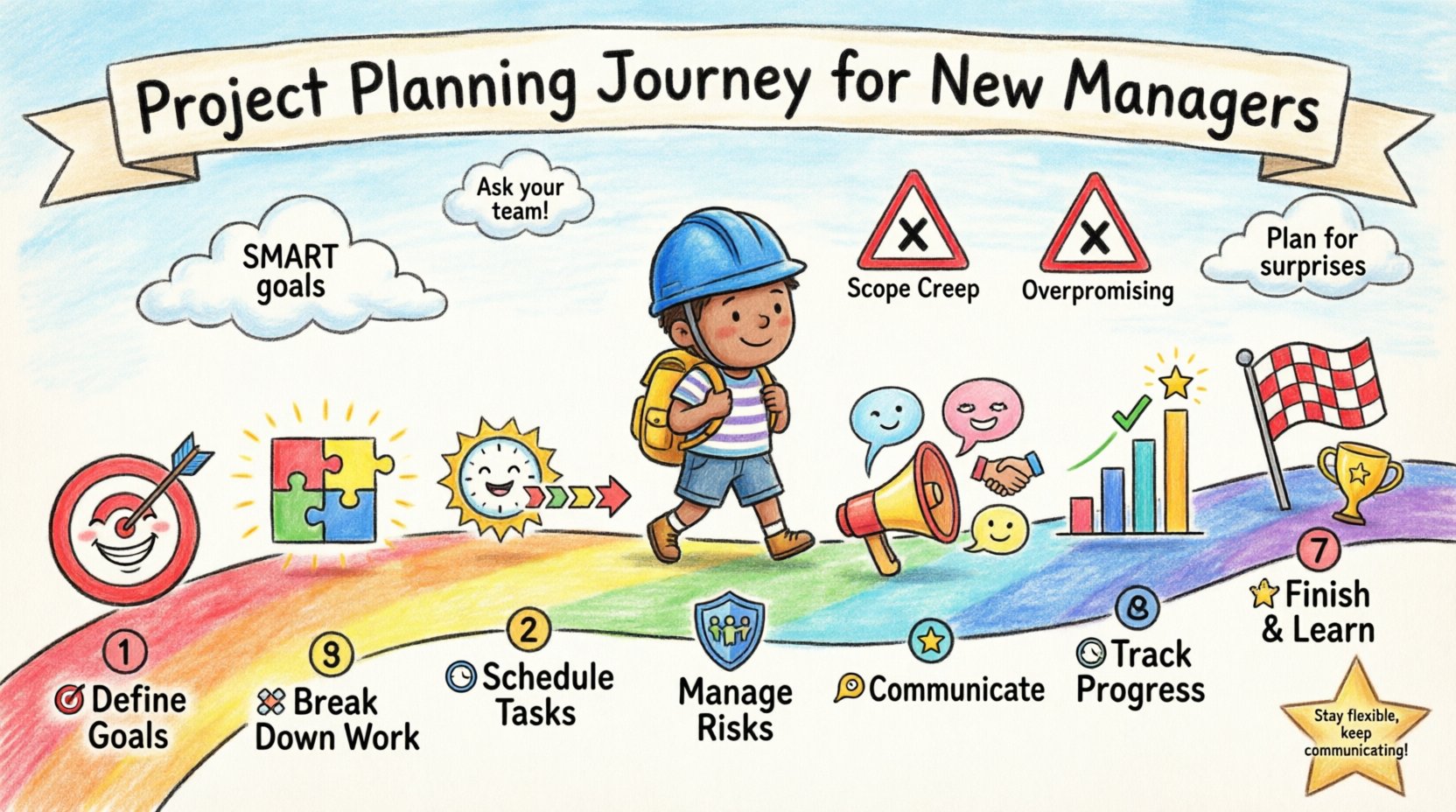
Why Planning Matters More Than You Think 🧭
Many new managers equate planning with delay. They believe that speed is the only metric that counts. This is a dangerous misconception. Speed without direction leads to wasted effort. A well-constructed plan does not slow you down; it clarifies the path so you can move faster with confidence. It aligns the team on what success looks like before work begins.
When you invest time in the planning phase, you reduce the cost of change later in the project. Changing a requirement during the design phase is cheap. Changing a requirement after code is written or construction has started is expensive. Planning allows you to identify these risks early. It shifts the dynamic from reactive to proactive.
The Cost of Skipping Planning
Skipping the planning stage often results in:
Scope Creep: Requests pile up, and the original goal shifts without anyone noticing.
Budget Overruns: Resources are consumed faster than anticipated.
Team Burnout: Unrealistic deadlines create unnecessary stress.
Quality Issues: Rushing execution leads to technical debt or errors.
Phase 1: Defining Scope and Objectives 🎯
The first step is to define exactly what is being delivered. Ambiguity is the enemy of execution. If your stakeholders cannot agree on the definition of done, you cannot plan for it.
1. Identify Stakeholders
You need to know who cares about the outcome. Stakeholders include anyone who influences the project or is influenced by it. This includes sponsors, end-users, and team members. For each group, you must understand:
What do they want to achieve?
How involved do they want to be?
What are their constraints?
2. Create a Statement of Work
Document the scope in writing. This document acts as the boundary for your project. It should list what is included and, crucially, what is not included. This prevents scope creep. Be specific. Instead of saying “improve user experience,” say “reduce the checkout time by 20%”.
3. Define Success Criteria
How will you know the project is finished? Success criteria must be measurable. Use the SMART framework:
Specific: Clear and unambiguous.
Measurable: Quantifiable metrics.
Achievable: Realistic given resources.
Relevant: Aligned with business goals.
Time-bound: Has a deadline.
Phase 2: Breaking Down the Work (WBS) 🧩
Once the scope is clear, you must break it down into manageable pieces. This process is known as creating a Work Breakdown Structure (WBS). A large project can feel overwhelming. A list of small tasks is actionable.
1. Decompose Deliverables
Start with the final deliverable. Break it into major components. Break those components into sub-components. Continue this until you reach a level where the task can be estimated and assigned. These smallest units are called work packages.
2. Assign Ownership
Every work package must have an owner. Do not assign tasks to a group without specifying who is responsible. This creates accountability. Use a RACI matrix to clarify roles:
Role | Responsibility | Accountability | Consulted | Informed |
|---|---|---|---|---|
Manager | Responsible for planning | Accountable for outcome | Consulted on risks | Informed of status |
Team Member | Responsible for execution | Accountable for quality | Consulted for technical input | Informed of changes |
3. Estimate Effort
Estimating is not about guessing. It is about using historical data and expert judgment. Ask the team members who will do the work to provide the estimates. They know the details better than anyone else. If a task takes three days, plan for three days. Add buffer for known risks, but do not pad the time arbitrarily.
Phase 3: Scheduling and Dependencies ⏱️
A schedule is the timeline of your project. It connects your tasks together based on logic and resources. A good schedule shows the sequence of events and identifies the critical path.
1. Identify Dependencies
Tasks rarely happen in isolation. You need to map how they relate to each other:
Finish-to-Start: Task B cannot start until Task A finishes.
Start-to-Start: Task B cannot start until Task A starts.
Finish-to-Finish: Task B cannot finish until Task A finishes.
2. Determine the Critical Path
The critical path is the longest sequence of dependent tasks. It determines the shortest possible time to complete the project. If a task on the critical path is delayed, the whole project is delayed. Focus your energy here. Non-critical tasks have float, meaning they can be delayed without affecting the final date.
3. Resource Allocation
Do not assign tasks based on who is available; assign them based on who is capable. Overloading a team member creates a bottleneck. If you have limited resources, you must adjust the schedule or scope. Be honest about capacity. If the team is at 100% capacity, there is no room for error.
Phase 4: Risk Management 🛡️
Things will go wrong. The goal of planning is not to predict the future, but to prepare for it. A risk register is a document that tracks potential issues and how you will handle them.
1. Identify Risks
Brainstorm with your team. Ask “What could go wrong?” Look at past projects for clues. Common risks include:
Key personnel leaving the organization.
Technology failures or compatibility issues.
Changes in regulatory requirements.
Vendor delays.
2. Assess Impact and Probability
Not all risks are equal. Rate each risk based on how likely it is to happen and how much damage it would cause. Use a matrix to prioritize:
High Probability / High Impact: Must have a mitigation plan.
Low Probability / High Impact: Have a contingency plan.
High Probability / Low Impact: Monitor closely.
Low Probability / Low Impact: Accept the risk.
3. Mitigation Strategies
For every high-priority risk, define an action. Mitigation means reducing the probability. Contingency means having a plan B. For example, if a vendor might delay, have a backup vendor ready. If a key developer might leave, ensure documentation is up to date so others can take over.
Phase 5: Communication Plan 📢
Information silos kill projects. People need to know what is happening, when, and why. A communication plan defines the flow of information.
1. Determine Frequency
How often should stakeholders hear from you? Daily updates might be too much for executives. Weekly summaries might be too little for the team. Find the right rhythm. Common cadences include:
Daily Stand-up: For the core team (15 minutes).
Weekly Status Report: For stakeholders (email or dashboard).
Monthly Steering Committee: For senior leadership (presentation).
2. Choose the Right Channel
Not all information fits in an email. Use the right tool for the message:
Urgent Issues: Phone call or instant message.
Formal Decisions: Email with read receipts.
Project Status: Shared dashboard or document.
Complex Topics: Face-to-face or video meeting.
3. Feedback Loops
Communication is a two-way street. Ensure there is a mechanism for stakeholders to ask questions and provide feedback. This prevents surprises at the end of the project. Regular check-ins allow you to course-correct early.
Phase 6: Execution and Monitoring 📊
Once the plan is set, execution begins. However, planning is not done. You must monitor progress against the baseline.
1. Track Progress
Compare actual progress to planned progress. Use metrics like percentage complete or tasks finished. If you are behind schedule, identify the cause immediately. Is it a resource issue? A technical hurdle? Scope change?
2. Manage Change
Changes will happen. New requirements will arise. Do not just say yes to everything. Use a change control process. Evaluate the impact of the change on time, cost, and scope. Get approval from the sponsor before making the change. This protects the integrity of the plan.
3. Quality Assurance
Quality is not an afterthought. It must be built into the process. Define standards for deliverables. Review work regularly. If quality slips, schedule slips. It is better to spend time fixing it now than to fix it after launch.
Phase 7: Closure and Lessons Learned 🏁
Ending a project is just as important as starting one. Formal closure ensures that everything is handed over correctly and the team knows the project is officially finished.
1. Handover and Acceptance
Get formal sign-off from the stakeholders. Ensure all deliverables meet the success criteria defined in Phase 1. Transfer ownership to the operations or support team. Provide training and documentation.
2. Release Resources
Formally release team members from the project. This allows them to move to new assignments. Close out contracts with vendors. Pay outstanding invoices. Archive project documents for future reference.
3. Retrospective
Hold a meeting to discuss what went well and what did not. Be honest. This is not about blame; it is about improvement. Document these lessons so the next project manager can benefit. This builds organizational knowledge.
Common Pitfalls to Avoid ⚠️
Even with a good plan, mistakes happen. Here are common traps new managers fall into:
Planning Perfectionism: Do not try to plan every detail perfectly. Plans change. Focus on the critical path and major risks.
Ignoring Resistance: Do not assume the team will follow the plan without pushback. Listen to their concerns.
Overpromising: Do not commit to dates you cannot meet. It is better to under-promise and over-deliver.
One-Way Communication: Do not just send updates. Ask for input. Engagement increases buy-in.
Final Considerations 🌟
Project planning is a skill that improves with practice. You will make mistakes, and that is part of the learning process. The goal is not to be perfect on the first try, but to be better than you were yesterday. By following these steps, you build a framework that supports your team and your organization.
Remember, the plan is a living document. It evolves as the project evolves. Stay flexible, stay communicative, and keep the end goal in sight. With a solid plan, you remove the guesswork and create an environment where success is achievable.
Related posts:
 Project Management 101: A Beginner’s Quick Start Guide to Leading Projects with Confidence
 What Project Managers Actually Do: A Real-World Component Breakdown for Aspiring Leaders
 The Project Management Lifecycle Explained: A Comprehensive Walkthrough from Start to Finish
 7 Common Project Management Mistakes That Derail Teams (And How to Avoid Them)