
VP OpenDocs: Architecting a Sustainable Knowledge Hub
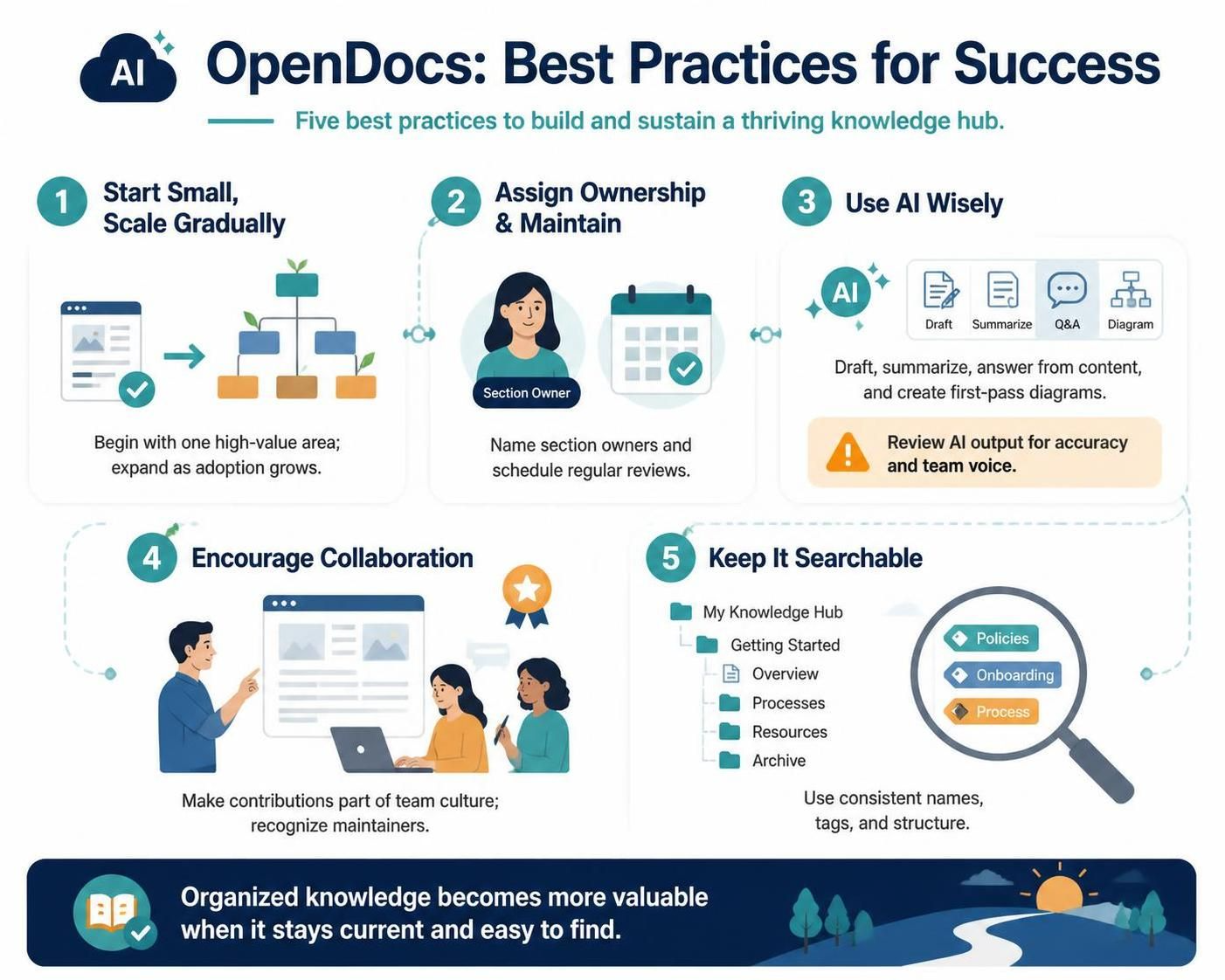
Building a thriving knowledge base is not merely about uploading documents; it is about engineering a system that evolves with your team. The OpenDocs framework visualizes this process as a structured lifecycle involving five critical architectural components. From the initial seed of content to the final searchability layer, each element plays a distinct role in ensuring information remains accurate, accessible, and valuable.
1. The Growth Strategy: Start Small, Scale Gradually
One of the most common architectural failures in knowledge management is the “Big Bang” approach—attempting to migrate an entire organization’s documentation overnight. The OpenDocs model advocates for an iterative, seed-based approach. Instead of a massive overhaul, you should identify a single high-value area, such as onboarding documentation or a specific project repository.
By starting small, you establish a pattern for success. As the team adopts the platform and the value of the specific area becomes evident, you can naturally expand the “tree” of information. This gradual scaling reduces cognitive load and allows the culture to adapt to the new tools.
2. The Governance Layer: Ownership and Maintenance
A knowledge base without governance is destined to become a digital graveyard. The second component of this architecture is the assignment of Section Owners. Just as a city needs a sanitation department to keep streets clean, a knowledge hub requires specific individuals responsible for the currency of their respective sections.
This layer is defined by two actions:
- Assignment: Explicitly naming who is responsible for specific documents.
- Scheduling: Setting regular review intervals to ensure accuracy.
3. The Automation Engine: Leveraging AI Wisely
In the modern architecture of information management, Artificial Intelligence acts as the automation engine. However, the OpenDocs framework emphasizes “Human-in-the-Loop” AI usage. AI should not be the final authority but rather the generator of the first draft.
Specifically, the system model highlights four primary use cases for AI integration:
- Drafting: Generating initial templates and outlines.
- Summarization: Condensing lengthy technical documents.
- Q&A: Answering queries based on existing content.
- Visualization: Creating first-pass diagrams.
Crucially, a review step is mandatory to refine AI output, ensuring it aligns with the team’s voice and technical accuracy.
4. The Cultural Interface: Encouraging Collaboration
Technology is only as good as the people using it. The fourth pillar is the cultural interface, which transforms knowledge contribution from a chore into a core team value. This involves recognizing and rewarding team members who actively maintain the system. When contributions are incentivized, the system becomes self-sustaining.
5. The Retrieval System: Keeping It Searchable
The final architectural layer is the organization of the data structure itself. If information is hidden, it is effectively lost. The OpenDocs model dictates the use of consistent naming conventions, tags, and hierarchical structures. This “Searchable” layer ensures that when a user looks for “Onboarding” or “Policies,” the system can retrieve the information instantly.
Technical Model Summary
To visualize the OpenDocs architecture, we can map these principles to a standard system logic flow. The following pseudo-code represents the lifecycle of a document within this framework:
// Initialize Knowledge Base with High-Value Seed
function initKnowledgeHub() {
    let seedArea = "Onboarding Documentation";
    createSection(seedArea);

    // Assign Governance
    assignOwner("Section Lead", seedArea);
    scheduleReview(seedArea, frequency="Monthly");
}

// Process Document Creation
function createDocument(topic) {
    // AI Drafting Phase
    let draft = AI.generateDraft(topic);

    // Human Review Phase
    let refinedContent = HumanReview(draft, "Check Accuracy");

    // Storage Phase
    storeInStructure(refinedContent, tags=["Searchable", "Current"]);
}
By adhering to these five best practices, you ensure that your knowledge hub remains a dynamic, evolving asset rather than a static repository of outdated files.